Could padel work here?
Before you design the courts, make sure the site works.
Have land, a building, an underused commercial site or an existing sports or leisure venue? Before you start choosing courts, the first question is whether the site can realistically support them. Build & Padel can give you an initial view of your site's padel potential and help you understand what needs investigating before you commit to a full development.
20+ years of UK construction and groundworks experience
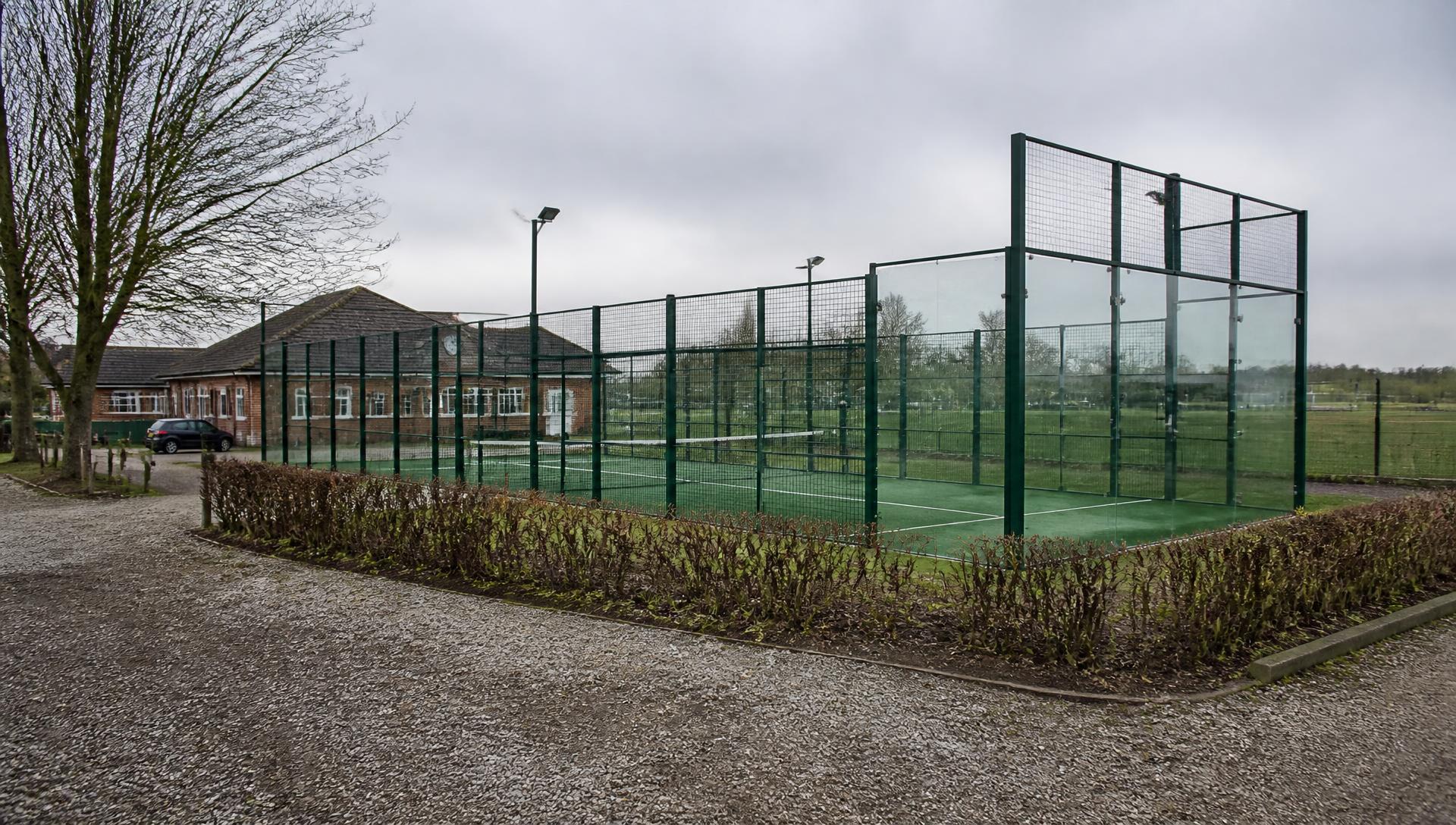
Could you build a padel court on your land?
A site can look entirely suitable from a map or a satellite image and still present significant development challenges. The question is never simply whether a court physically fits inside the red line.
A proper padel court site assessment considers site area, court layout, access, ground conditions, levels, drainage, planning, lighting, noise, neighbours, parking, services, existing buildings, construction access and how the finished facility would actually be operated.
Having enough land for a court is not the same as having a viable padel court site.
- Site area
- Court layout
- Access
- Ground conditions
- Levels
- Drainage
- Planning
- Lighting
- Noise
- Neighbours
- Parking
- Services
- Existing buildings
- Construction access
- Operational requirements
Recognise your situation?
This page is for anyone who owns, controls or is considering a site that might support padel — and wants an honest view before spending money on design.
Landowners
Padel can be a use for land that has development potential but no obvious occupier.
Explore your site →Investors
Padel is being assessed as a leisure and sports asset class across the UK.
Explore your site →Developers
Padel can add amenity and activity to a wider leisure, residential or mixed-use scheme.
Explore your site →Commercial property owners
Underused buildings and yards can sometimes be converted rather than left empty.
Explore your site →Tennis clubs
An existing membership and sporting infrastructure make padel a natural adjacency.
Explore your site →Golf clubs
Padel can broaden the membership offer and use land that earns little today.
Explore your site →Rugby clubs
Additional revenue from land or corners of the ground that are rarely used.
Explore your site →Football clubs
Spare land and an existing local following can support a year-round facility.
Explore your site →Leisure operators
Padel can be a new venue or an addition to an existing leisure operation.
Explore your site →Universities
Campus land and sport departments can support both student and community play.
Explore your site →What makes a good padel court site?
There is no such thing as a standard padel court site. These are the characteristics that tend to separate a workable site from an expensive one.
Space
Enough usable area for the courts, the run-off around them, circulation and anything the venue needs to operate — not just the court footprint.
Access
How players, staff and deliveries arrive, and whether the access can take the traffic the finished facility will generate.
Ground conditions
What is under the surface. Made ground, soft spots, rock or contamination change the cost of the base significantly.
Drainage
Where surface water goes, whether there is a legal discharge point, and whether attenuation is required.
Planning context
Current use, planning history, designations, neighbours and local policy all shape what is realistic.
Parking
Padel generates arrivals in concentrated blocks. Parking is often the constraint that limits court numbers.
Services
Power for lighting, water and drainage, and data. Long service runs and supply upgrades add cost quickly.
Neighbouring uses
Padel is audible. Distance to dwellings, screening and orientation matter to both planning and goodwill.
Lighting
Floodlighting extends usable hours but brings light spill, curfews and planning conditions with it.
Operational potential
Whether the finished facility could actually be run, staffed, accessed and filled by the people nearby.
How much land do you need for padel courts?
There is no single answer, and anyone who gives you one without seeing the site is guessing. Padel court land requirements depend on the number of courts, the arrangement, whether the format is indoor or outdoor, circulation, safety requirements, access, buildings, reception, changing facilities, toilets, café or bar, storage, plant, parking, landscaping and planning constraints.
Dividing your total site area by the dimensions of a court will not tell you how many courts can be built. Usable area is almost always smaller than site area once access, drainage, levels and setbacks are allowed for.
Ask us what your site could accommodateSingle court plus run-off and access
Paired courts, shared circulation
Row of three, one access spine
Two by two with a central walkway
Venue scale — building, parking, plant
Illustrative concepts only. These are not planning drawings or layout proposals.
Thinking about building padel courts on land? Start with the site.
Land can look ready and still need serious investigation. Before anyone commits to a court order, the parcel needs assessing for planning, access, ground conditions, drainage, levels, utilities, parking, noise, lighting, landscape impact and construction logistics.
Whether you can build padel courts on a particular parcel of land depends on the site's planning context and the proposed development. We can tell you what we would want to investigate — we won't tell you it's fine before we've looked.
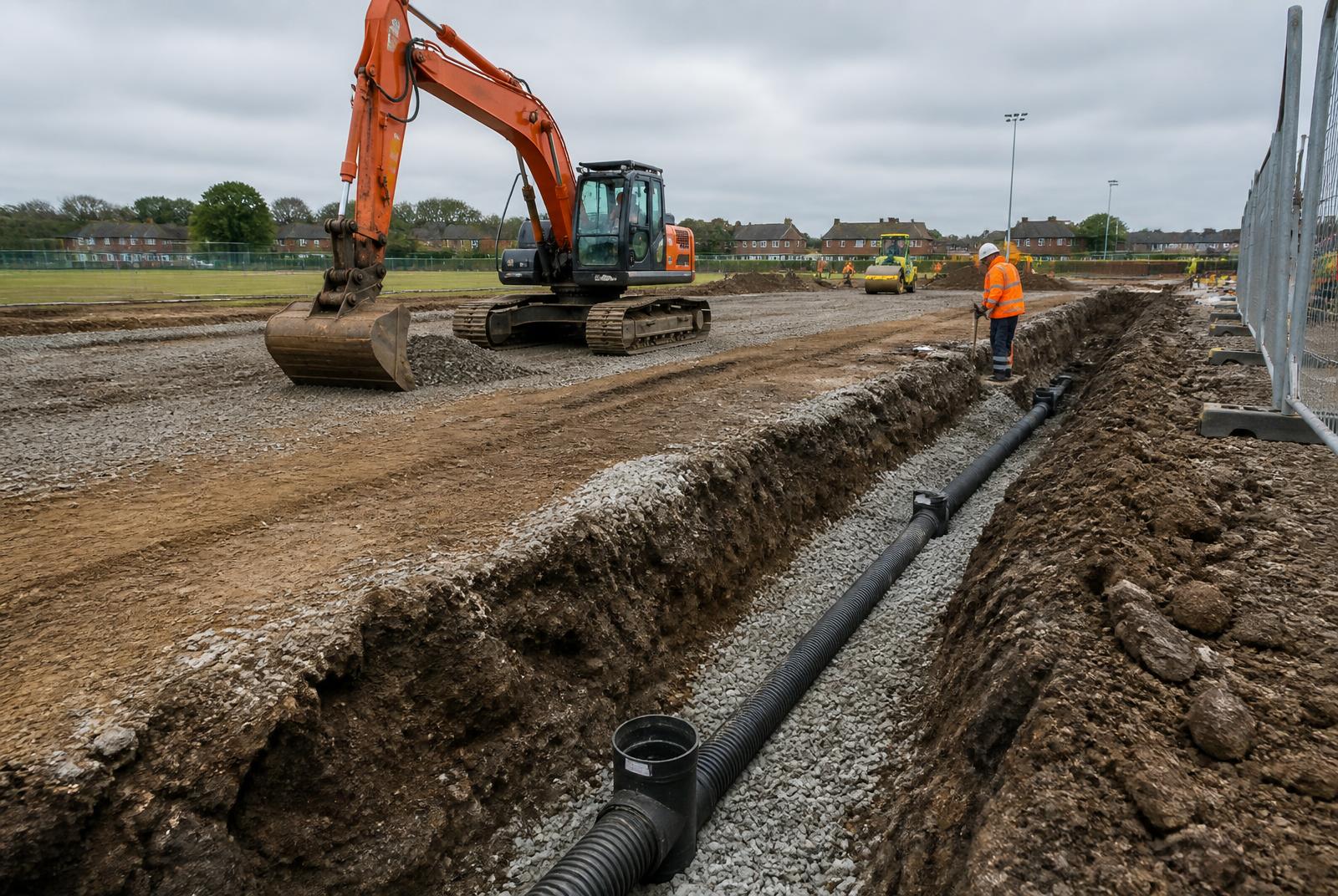
Most of the risk on a padel development sits below ground — groundworks for padel courts is where budgets are won or lost.
Indoor, outdoor or covered?
The right format depends on the site, the operator and the business model — not on what looks best in a render.
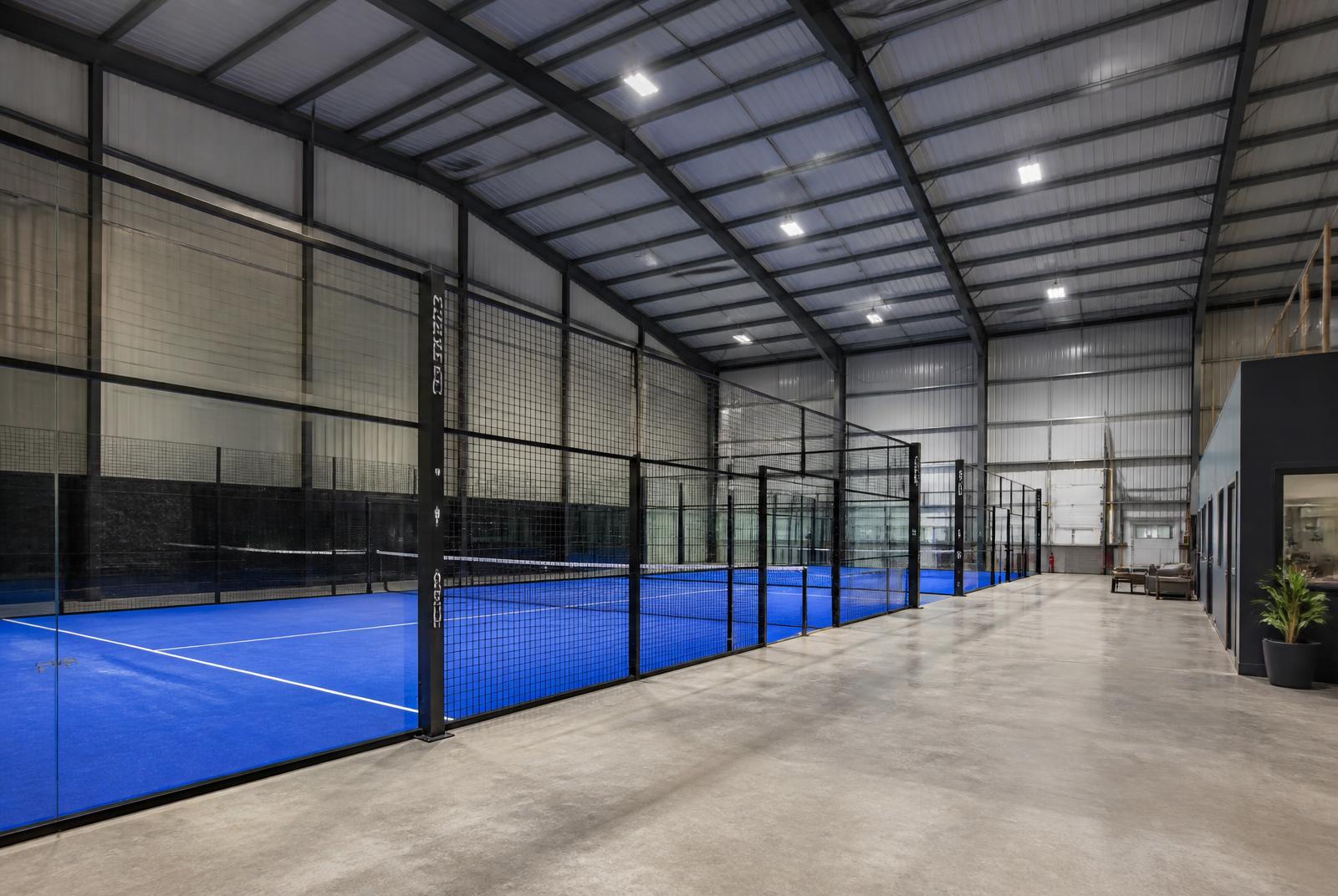
Outdoor
Usually the lowest capital cost, and the most dependent on the ground. Land, drainage and groundworks dominate the budget; lighting, noise, weather, planning and neighbours dominate the consent and the usable hours.
Indoor
Year-round utilisation, but only where the building genuinely works. Internal dimensions, clear height, structure and column positions, existing slab, fire requirements, ventilation, lighting, planning use and overall building condition all need checking before a warehouse padel conversion is assumed.
Covered
A middle ground that protects play without the cost of a full building. It is still a structure: foundations, wind loading, fire and planning consideration all apply, and it changes how the site reads in the landscape.
Could padel work for your organisation?
Padel isn't right for every organisation or every site. Here is how the opportunity and the constraints usually look by type.
Landowners
- Why it could be relevant
- Padel can be a use for land that has development potential but no obvious occupier.
- What may already help
- Open, workable land and often existing access.
- Main site considerations
- Planning context, access, drainage, services and distance to a catchment.
Investors
- Why it could be relevant
- Padel is being assessed as a leisure and sports asset class across the UK.
- What may already help
- Capital and appetite; often no site yet, or several under consideration.
- Main site considerations
- Physical suitability and commercial demand need to be tested separately.
Developers
- Why it could be relevant
- Padel can add amenity and activity to a wider leisure, residential or mixed-use scheme.
- What may already help
- Masterplanning, professional teams and planning experience.
- Main site considerations
- Court positioning, acoustics, lighting, phasing and construction sequencing.
Commercial property owners
- Why it could be relevant
- Underused buildings and yards can sometimes be converted rather than left empty.
- What may already help
- Structures, hardstanding, parking and existing services.
- Main site considerations
- Clear height, slab condition, use class, fire strategy and lease constraints.
Tennis clubs
- Why it could be relevant
- An existing membership and sporting infrastructure make padel a natural adjacency.
- What may already help
- Courts, changing rooms, parking, floodlighting and a community.
- Main site considerations
- Layout, planning, member demand, access and the operating model.
Golf clubs
- Why it could be relevant
- Padel can broaden the membership offer and use land that earns little today.
- What may already help
- Extensive land, parking, clubhouse and leisure infrastructure.
- Main site considerations
- Landscape impact, access, planning, drainage and fit with the existing operation.
Rugby clubs
- Why it could be relevant
- Additional revenue from land or corners of the ground that are rarely used.
- What may already help
- Changing and social facilities, floodlighting and an established audience.
- Main site considerations
- Pitch protection, drainage, parking, planning and volunteer-run operating capacity.
Football clubs
- Why it could be relevant
- Spare land and an existing local following can support a year-round facility.
- What may already help
- Parking, facilities, lighting infrastructure and community reach.
- Main site considerations
- Space around pitches, access, planning, noise and who operates the courts.
Hotels
- Why it could be relevant
- Padel can be a guest amenity, a local membership product or both.
- What may already help
- Underused outdoor space, parking, F&B and reception already staffed.
- Main site considerations
- Noise, guest experience, operating hours, access and commercial positioning.
Leisure operators
- Why it could be relevant
- Padel can be a new venue or an addition to an existing leisure operation.
- What may already help
- Operating capability, systems and an existing customer base.
- Main site considerations
- Site availability, court numbers, utilisation assumptions and capital cost.
Schools
- Why it could be relevant
- Padel can extend sports provision and enrichment within a campus.
- What may already help
- Land, existing sports facilities and often floodlighting.
- Main site considerations
- Safeguarding, community use, planning, operating hours and funding route.
Universities
- Why it could be relevant
- Campus land and sport departments can support both student and community play.
- What may already help
- Estates teams, existing facilities, parking and a resident population.
- Main site considerations
- Estate strategy, planning, access, community access and management model.
10 questions we ask about a potential padel site
- 01
How much usable space is available?
- 02
How many courts could realistically fit?
- 03
How do people access the site?
- 04
How will construction equipment access it?
- 05
What are the ground conditions?
- 06
How will the site drain?
- 07
What planning issues could arise?
- 08
Where will parking go?
- 09
What services are available?
- 10
Does the development make commercial sense?
A site can look perfect on Google Maps and still be wrong for padel.
- Large area
- Good road access
- Close to population
- Existing building
- Plenty of space
- Poor drainage
- Difficult access
- Neighbouring properties
- Planning constraints
- Level changes
- Limited parking
- Insufficient services
- Construction restrictions
This is why we start with the site, not the court.
From initial idea to viable development
Initial site conversation
Understand what you have and what you're considering.
Initial site view
Identify the obvious opportunities and the obvious constraints.
Feasibility
Where appropriate, undertake a more detailed assessment of the site.
Planning & design
Develop the project with the appropriate professional input.
Construction
Groundworks, infrastructure, courts, buildings and associated works.
Handover & aftercare
Support the project beyond installation.
An early conversation is not a substitute for a formal survey, engineering assessment or planning advice. It is there to tell you whether those things are worth commissioning.
An initial view isn't a full feasibility study
- Early opportunity assessment
- Obvious constraints
- Initial court potential
- Basic site discussion
- Decide whether to investigate further
- Site visit
- Detailed measurements
- Topographical information
- Ground investigation where required
- Drainage assessment
- Layout options
- Planning considerations
- Cost planning
- Development risks
- More detailed commercial assessment
The initial conversation and initial view are free. Detailed padel site feasibility and planning support may be a paid service, and we'll tell you clearly if and when that point is reached.
Why start with a construction company?
A court supplier sells you the court. We look at the project around it.
Construction-led
20+ years of UK construction and groundworks experience behind every assessment.
Manufacturer-agnostic
We aren't tied to a single court manufacturer, so the recommendation follows the site.
End-to-end
From site assessment and planning support through to groundworks, padel court construction, installation and aftercare.
Practical
The focus is whether the project can actually be built and operated, not whether it looks good on paper.
One accountable team
Less time coordinating suppliers who each own a different part of the problem.
What type of site are you considering?
“I have a field.”
Often the cheapest land and the most expensive groundworks. Drainage, access and planning usually decide it.
“I have an empty warehouse.”
Clear height, column spacing, slab condition and use class determine whether indoor padel is realistic.
“We have spare land at a hotel.”
Amenity and revenue potential, balanced against noise, lighting, parking and guest experience.
“We're a tennis club.”
Existing members and facilities help. Layout, planning and member demand still need testing.
“We're a golf club.”
Land is rarely the issue. Landscape impact, access and the fit with the existing operation are.
“We're a rugby or football club.”
Underused corners of the ground plus existing social facilities can make a small scheme work.
“We have an existing leisure facility.”
Adding courts to a running operation is usually about circulation, parking and programming.
“We're developing a new site.”
Getting padel into the masterplan early avoids awkward retrofits and acoustic problems later.
“We have unused commercial property.”
Hardstanding, parking and services already in place can make conversion attractive.
“We're a school or university.”
Campus logistics, safeguarding and community access shape the scheme as much as the space does.
A site can be physically suitable and still not make commercial sense
Physical feasibility and commercial viability are two different questions. A site that can take four courts is not automatically a site that can fill four courts.
Once a site looks physically viable, the next question is whether there is enough demand to justify the development.
Where that question matters, Padel Engine can support catchment analysis, competitor analysis, demand assessment, site comparison, commercial modelling and development opportunity assessment. It's a later-stage tool — the site comes first.
Send us your site
Not sure whether your site could work for padel? Send us the basics.
We don't need a detailed development proposal to start the conversation. A location, some photographs and a rough idea of what you're considering is enough for an initial discussion.
- 1. We read what you've sent and come back to you.
- 2. A short call about the site and what you're considering.
- 3. An initial view — opportunities, constraints, what to investigate.
Before you spend money designing the courts, check the site.
Whether you own land, operate a hotel, run a sports club, manage commercial property or are considering a new leisure development, the first step is understanding whether the site can support the project. Send us the site and let's look at the opportunity.
Don't start with the court. Start with the site.
Padel court site questions, answered
Could padel work on my site?
Possibly. It depends on usable space, access, ground conditions, drainage, levels, planning context, parking, services and whether the finished facility could realistically be operated. A short conversation and a look at the location is usually enough to say whether the site is worth investigating further.
How much land do I need for a padel court?
A single court is roughly 20m x 10m of playing enclosure, but a viable padel court site needs more than the court footprint: run-off and circulation around the enclosure, safe access, space for equipment during construction, and somewhere for people to arrive and park. Treat the court dimensions as the starting point, not the requirement.
How much land do I need for two padel courts?
Two courts side by side need the court enclosures plus the space between and around them, access routes and any supporting facilities. In practice most two-court outdoor schemes need a usable, reasonably level area considerably larger than twice a single court, once circulation, fencing lines, lighting positions and parking are allowed for.
How much land do I need for four padel courts?
A four-court scheme usually starts to behave like a venue rather than an add-on: reception, changing, toilets, storage, plant, parking and circulation all take space. There is no single figure — the arrangement of the courts and the constraints of the site drive the total area required.
What makes a good padel court site?
Enough usable, workable space; sensible vehicle and pedestrian access; ground that can be built on economically; somewhere for water to go; a supportive planning context; parking; available services; neighbouring uses that can live with lighting and play; and a realistic operating model.
Can I build a padel court on agricultural land?
Sometimes, but agricultural land often raises planning questions around change of use, access, landscape impact and lighting. Whether you can build padel courts on a particular parcel of land depends on the site's planning context and the proposed development, and needs to be checked properly rather than assumed.
Can I build padel courts on commercial land?
Commercial and previously developed land can be a strong starting point, particularly where access, hardstanding, parking and services already exist. The existing use, planning history and any lease or title constraints still need to be reviewed.
Can I build padel courts in a field?
A flat field can look ideal and still be difficult: drainage, ground conditions, access for construction traffic, distance to services, lighting impact and planning all have to work. The field is the opportunity; the site assessment tells you whether it is a viable one.
Can I convert a warehouse into a padel centre?
Warehouse conversions are one of the most common routes to indoor padel. The critical factors are clear internal height, column positions and clear spans, slab condition and level, fire strategy, ventilation, lighting, welfare provision, parking and the planning use of the building.
Do I need planning permission for padel courts?
In most cases some form of planning consent is involved, particularly where there is a change of use, new structures, floodlighting or increased traffic. Requirements vary by site and local authority, so this needs specific advice rather than a general answer.
What groundworks are required for padel courts?
Typically site clearance, excavation, drainage, a compacted sub-base and a concrete or porous macadam base built to a tight tolerance, plus ducting for lighting and power. The base is the part that determines whether the court still plays well in ten years.
Do padel courts need drainage?
Outdoor courts do — surface water has to be collected and discharged somewhere legally acceptable. Poor drainage is one of the most common reasons a physically spacious site turns out to be an expensive one.
Can padel courts be built on an existing concrete slab?
Sometimes. An existing slab needs to be assessed for thickness, condition, level tolerance, falls and load capacity. Where it is sound it can save significant cost; where it is not, overlaying a poor slab usually creates problems later.
Can a tennis club add padel courts?
Many can. Existing courts, changing rooms, parking, membership and sporting infrastructure make tennis clubs interesting candidates, but layout, planning, member demand, access and the operating model still need to be considered.
Can a golf club build padel courts?
Golf clubs often have land and leisure infrastructure already in place. Landscape impact, access, planning, drainage and the relationship between padel and the existing operation are the usual questions.
Can a hotel build padel courts?
Hotels with underused outdoor space may be able to add padel as an amenity or revenue stream. Guest experience, noise, lighting, parking, access and operating hours all need thinking through alongside the physical site.
Can a school or university build padel courts?
Padel can complement existing sports provision on a campus. Safeguarding, community use, access, planning, operating hours and campus logistics tend to shape the scheme as much as the available space does.
How many padel courts can fit on my land?
Dividing the site area by the court dimensions will not tell you. Court arrangement, run-off, circulation, access routes, drainage, parking, buildings and planning constraints all reduce the usable area. We look at the site as a whole and give you a realistic view.
What does a padel site feasibility assessment involve?
A formal padel site feasibility assessment typically includes a site visit, measurements, topographical information, ground investigation where required, a drainage assessment, layout options, planning considerations, cost planning and a view on development risk.
How much does a padel development cost?
It varies widely with site conditions, groundworks, drainage, court specification, lighting, enclosure, buildings and external works. Two sites with identical court counts can differ substantially once the ground is opened up, which is why we look at the site before quoting a project.
How long does it take to build padel courts?
The construction period is often shorter than the pre-construction period. Planning, design, surveys and procurement usually set the programme, and that is why early site assessment is worth doing before committing to a timescale.
Can Build & Padel help with planning?
We provide planning support and coordinate the appropriate professional input as part of a development. We are not a substitute for formal planning advice, and we will say when specialist consultants are needed.
Can Build & Padel assess my site?
Yes. We start with an initial site conversation and an initial view, and where it makes sense we carry out a more detailed feasibility assessment. If we don't think the site is suitable, we'll tell you.
What information do you need to look at my site?
A location or postcode, a rough idea of what you're considering, and any photographs or plans you already have. That is usually enough to start the conversation.